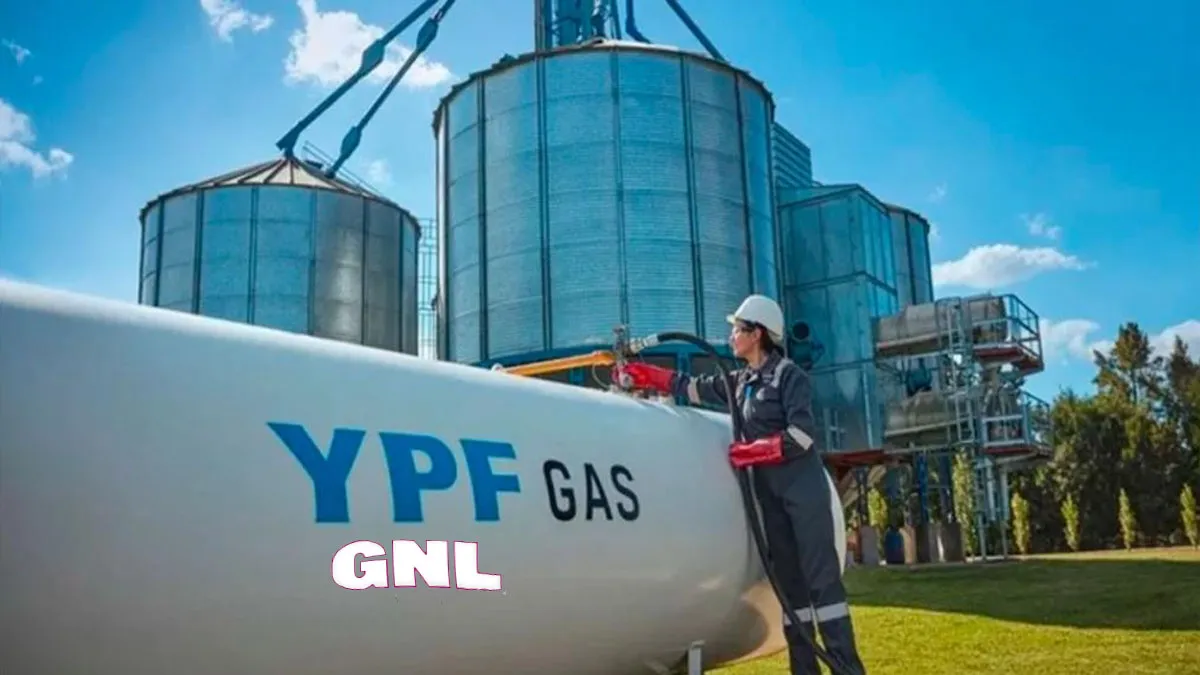
Buenos Aires, November 8, 2025 – Total News Agency-TNA–The deep energy alliance between Russia and China opens a strategic space in which Argentina can be a protagonist if it takes advantage of its resources in the Vaca Muerta shale formation. Vaca Muerta, the base of shale and unconventional gas in Neuquén, offers itself as a pillar of that export bet. In addition, the retreat of Russian diesel in some Latin American markets opens niches for Argentine oil if the country accelerates its productive growth to more than one million barrels per day. However, the scenario also presents structural risks. Since 2022, both countries have sealed ambitious agreements in gas pipelines, crude oil, coal, and nuclear energy, in addition to designing payment mechanisms in local currencies, partially bypassing the US dollar. Technical studies indicate that the country could enter the select group of LNG exporters if it carries out a project with two floating liquefaction units and sets up the necessary infrastructure by the end of the decade. If China consolidates very long-term contracts with Russia, Qatar, and the US, and orients its demand towards those blocks, it could block the entry of new operators. After Western sanctions, Moscow has closed ranks with Beijing and redirected most of its energy flows to Asia. Argentina must also consolidate domestic conditions so as not to be left out of a market that is no longer defined only by resource abundance, but by infrastructure, logistics, financing, and geopolitics. Argentina possesses crude oil, gas, and lithium, key resources in the global energy transition, which adds geopolitical value to its offer. The new board offers concrete opportunities. Furthermore, Argentina must overcome internal challenges: developing export infrastructure, improving the regulatory regime, stabilizing the macroeconomic framework, and overcoming the barrier of global competition in production and transportation costs. The deepening of the Russia-China axis ultimately marks a change of era in the geopolitics of energy: flows are reordering, prices are adjusting, and global competition is intensifying. On the one hand, the saturation of Russian gas to Asia allows room for new LNG and oil suppliers; on the other, Europe persists in diversifying its sources outside of Russia and the Middle East, which enables Argentina to gain ground. According to the analysis of expert discourse, this alliance—and particularly the project of the Power of Siberia 2 gas pipeline, which is expected to transport up to 50,000 million m³ of gas per year to China—strengthens the geopolitical position of the Eurasian bloc and pressures for greater diversification of suppliers in Europe, Asia, and Latin America. In this context, Argentina looks to position itself as a credible alternative energy supplier. For Argentina, a decisive moment opens up: it can take advantage of that global transformation from Vaca Muerta, deploy a smart international insertion strategy, and play its export card. This turn not only reconfigures the maps of oil, gas, and LNG but also impacts the position of emerging producer countries that aspire to insert themselves into reliable international markets. Russia-China cooperation is no longer a one-off experiment.